
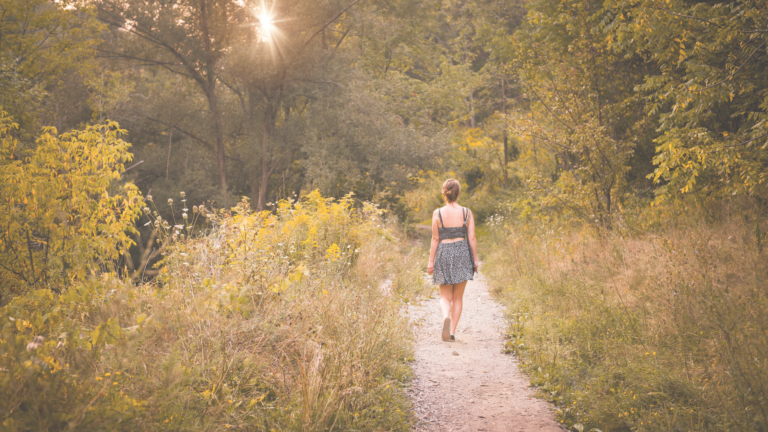
Let’s take the metaphor literally for a minute.
What makes grass greener?
Maybe it’s new.
Maybe it’s been watered.
Maybe someone has taken care of it.
Maybe it gets more sunlight.
Maybe the soil is better.
Maybe the person standing on the other side simply has a different kind of grass.
And why do we automatically assume that greener means better?
A lush green lawn might look beautiful, but maybe you don’t want a lawn at all.
Maybe you want a garden.
Maybe you want trees.
Maybe you want a place where you can sit outside and watch the sunset.
Maybe you want somewhere your dog can run.
Maybe what you actually need isn’t greener grass.
Maybe you need a different yard.
The problem with “greener”
The word greener makes the comparison about appearance.
It suggests that we’re supposed to look across the fence and decide whether someone else’s grass looks better than ours.
A relationship doesn’t need to look better than someone else’s relationship. A career doesn’t need to sound more impressive than someone else’s. A home doesn’t need to look like the one on Instagram.
The more useful question might be:
Does this fit me?
Does this relationship allow me to be myself?
Does this work give me enough meaning, flexibility, challenge, creativity, or stability?
Does the life I’m building actually meet my needs?
Those questions are very different from asking whether something else looks greener.
Sometimes we’re afraid to explore because we’ve been taught to be grateful
There is a particular kind of stuck-ness that can happen when we confuse gratitude with contentment.
We can be grateful for something and still recognize that it isn’t working for us anymore.
We can appreciate what a relationship has given us and still question whether we want to remain in it.
We can be grateful for a career and still want something different.
We can acknowledge that something isn’t terrible without deciding that it is therefore good enough.
It could be worse is a surprisingly powerful way to stay stuck.
And sometimes, the fear of making the wrong choice becomes more powerful than the desire to discover what might be possible.
So we stay.
We don’t ask ourselves what excites us anymore.
We don’t investigate what we’re curious about.
We don’t consider what might be possible because we’ve already decided that whatever is on the other side probably isn’t any better.
But how would we know?
You don’t have to believe the grass is greener
Here’s where I think we can challenge the cliché without replacing it with another cliché.
You don’t have to believe the grass is greener.
You don’t have to assume that leaving will make you happier.
In fact, sometimes the grass isn’t greener.
Sometimes we bring the same patterns with us.
Sometimes we idealize what’s on the other side because we’re frustrated with where we are.
Sometimes we discover that the thing we thought we wanted isn’t actually what we needed.
And sometimes we leave something only to realize that the problem wasn’t the yard.
It was the way we were caring for it.
That’s worth exploring, too.
But exploration isn’t the same thing as leaving
This is perhaps the most important distinction.
Considering another possibility doesn’t mean you have to choose it.
Sometimes exploring another possibility actually helps us appreciate what we already have.
Sometimes it gives us information about what needs to change where we are.
Sometimes it confirms that we’re exactly where we want to be.
And sometimes it reveals something we hadn’t allowed ourselves to consider.
Maybe the question isn’t “Is the grass greener?”
Instead of asking:
What if it isn’t better over there?
What if we asked:
What am I actually looking for?
What is missing here?
Have I tried to change what isn’t working?
What needs of mine aren’t being met?
What makes me feel alive?
What am I curious about?
What would I explore if I knew I didn’t have to commit to it?
Am I staying because this is what I want — or because I’m afraid there isn’t anything else?